Register for your Free Membership for The Riveter Newsletter or Upgrade to a Subscription for the Impact Report Feature and gain full access!

Join the Revolution!

Already a Member/Subscriber: Login Here

Fresh Start. Sharper Questions. Zero Patience for Nonsense

August has a funny way of showing up with fresh-start energy while the rest of us are still trying to locate our coffee, our confidence and the email we absolutely meant to answer yesterday. This month, we are talking about the kind of growth that actually changes things: asking for guidance, saying the uncomfortable thing out loud, planning for what comes next and building workplaces where women can do more than survive the shift.

No inspirational wallpaper. No participation trophy for basic professionalism. Just smart women, useful conversations and a reminder that the future of collision repair belongs to the people willing to build it.

August E-News Features:

Sound Off, DisruptHERs!

-Call for Submissions

Want to Have your Tips published in G&G?

Your favorite shop-floor shortcut, a wellness habit that keeps the chaos from chewing through your last nerve, the tool you would absolutely rescue from a burning toolbox—we want the advice women in collision repair actually use.
Share what you know for a chance to be featured in an issue of Glossed & Gritty or on our social channels. The strongest lessons in this industry usually come from somebody who already learned them the hard way.

The Conversation Women Owners Avoid

Hannah Chalker on family, fairness, succession and letting go with a plan
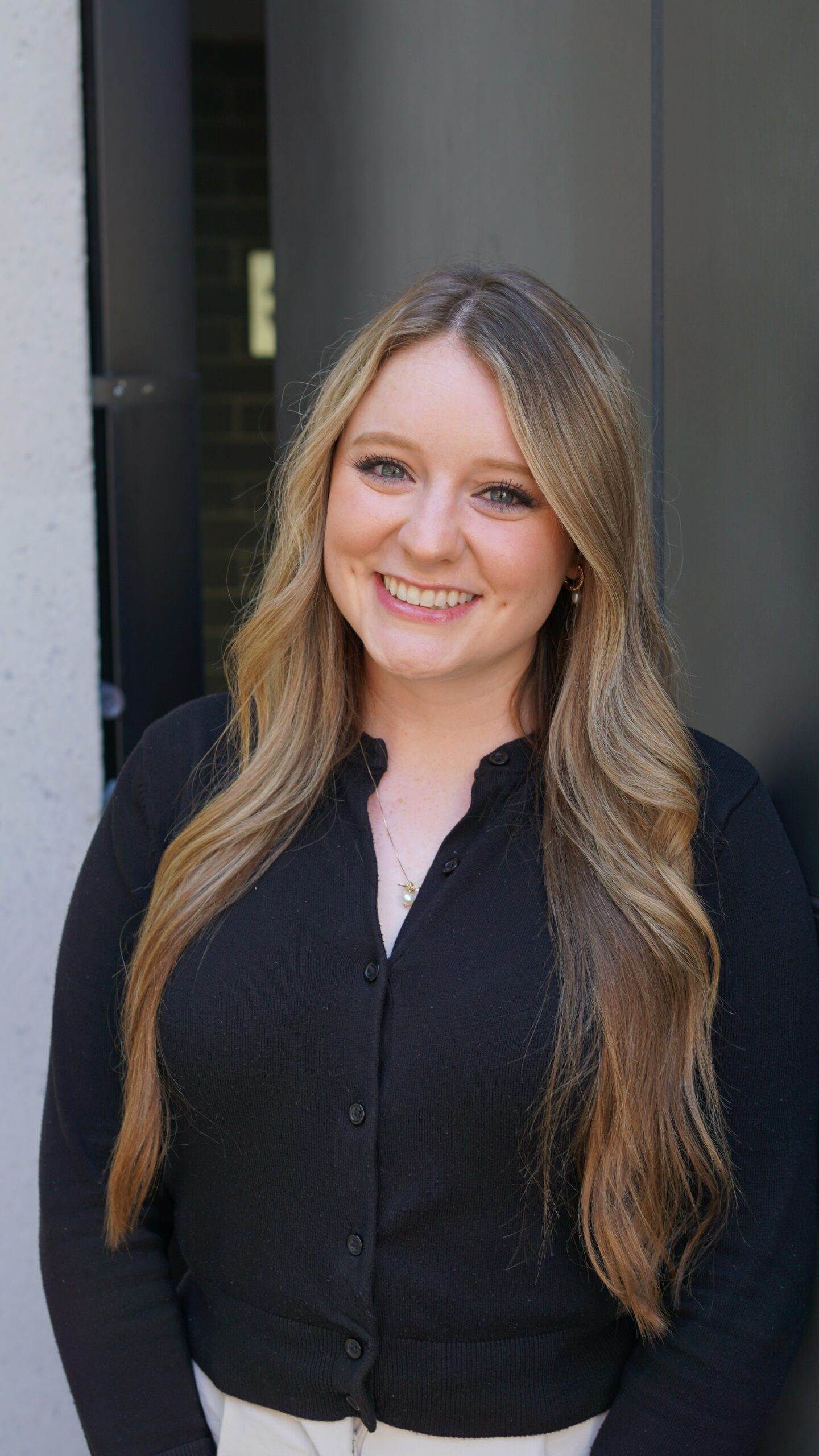
The hardest part of succession planning usually is not the valuation, the documents or the financial math. It is the family conversation everyone keeps rescheduling until the future shows up uninvited.
Hannah Chalker explains why fair is not always equal, how owner dependency can erode a shop’s value, and why protecting your business and your relationships starts long before anyone hands over the keys.


More Than Scholarships: CREF Helps Drive a More Diverse Future for Collision Repair

     The collision repair industry’s future isn’t just growing – it’s becoming more representative of the communities it serves.

     As part of its ongoing mission to invest in the next generation of collision repair professionals, the Collision Repair Education Foundation (CREF) awarded more than $195,000 in scholarships and tool grants to 102 collision repair students across the country in 2026, and this year’s recipient data tells an encouraging story about the industry’s evolving workforce.

     Based on voluntary self-reporting, 80% of scholarship recipients identified as members of diverse populations! More than 30% identified as female, 1.7% identified as non-binary or non-conforming, and nearly 63% identified as a race other than Caucasian. Nearly half (47.79%) of recipients identified as Hispanic or Latino.

     For an industry working to strengthen its talent pipeline while broadening representation, those numbers signal meaningful progress.

     “These students represent the future of collision repair,” said Melissa Marscin, CREF’s Director of Operations and Impact. “By investing in their education today, we’re helping ensure the industry has the skilled, passionate professionals it needs tomorrow.”

   A significant contributor to that progress is CREF’s continued partnership with the Women’s Industry Network (WIN). Now in its third year, the collaboration extends well beyond financial assistance, creating opportunities for students to build meaningful industry relationships and access long-term professional support. In 2026, WIN awarded $29,500 in scholarships, distributed 20 tool kits and provided recipients with complimentary WIN Student Memberships, virtual conference access and eligibility to participate in WIN’s mentoring program, connecting students with experienced collision repair professionals and peers across North America.

   While financial support helps remove barriers to education, mentorship and visibility often determine whether students remain in the industry and ultimately become its next generation of leaders.

   The growing diversity reflected in this year’s scholarship recipients demonstrates that collision repair is attracting talent from a broader range of backgrounds than ever before. As more women and individuals from historically underrepresented communities discover opportunities in the industry, organizations like CREF and WIN are helping ensure those students not only enter the workforce – they also have the resources, support and professional networks needed to thrive!

   Scholarships were awarded to high school and post-secondary collision repair students nationwide through support from numerous industry partners, reinforcing a shared commitment to strengthening the future collision repair workforce through education, opportunity and inclusion.

     For more information about CREF, visit CollisionRepairEducationFoundation.org.

Class is Almost in Session

Issue 3 is headed your way with more conversations about confidence, leadership, shop culture and women claiming space in an industry that still has some catching up to do.
Until then: ask the question, start the conversation, introduce yourself to the person who knows something you want to learn—and stop waiting for permission to belong in rooms you already earned your way into.

STILL WORTH THE READ…

Issue 2 Did Not Expire When the Calendar Flipped

Missed Issue 2: Summer 2026?

Start with the Glossed Preview for a look at the women, careers and conversations driving the movement.

Fair warning: one article has a habit of becoming six open tabs.

Want to move past The Glossed and Get to The Gritty for full access to Issue 2?

Check out our subscriptions below:


Forward this edition to a woman in collision repair who should be in this community.

Great work deserves visibility—and useful information should not be hoarded like the only functioning scan tool.

Member & Subscriber Features: August 2026

If Women Can’t Survive Your Shop, Fix Your Shop!

Part 2: Building the Pipeline

     In the June 2026 issue of Glossed & Gritty, we explored how leadership in collision repair is evolving through the experiences of Dawn Engel, co-owner of JDs Macomb Auto Collision (Shelby Township, MI); Andrew “Drew” Bryant, CEO of DB Orlando Collision Center (Orlando, FL); and Amber Alley, General Manager of Barsotti’s Body & Fender (San Rafael, CA). 

     Our cover story focused on leadership, culture and representation, but as often happens when three strong leaders start talking shop, we uncovered far more than could fit into a single feature. Beneath the discussion of leadership titles and organizational charts was a larger conversation about culture, opportunity and the systems that determine who gets to grow, who gets overlooked and who ultimately helps shape the future of collision repair.

In Part 2, we discuss building the pipeline. Recruiting women is not a workforce strategy if the shop culture runs them off before they can build a career. Training, mentorship, competitive pay, visible advancement and basic human decency are not decorative extras. They are the pipeline. Amber Alley, Dawn Engel and Drew Bryant unpack what it takes to grow talent, confront bad behavior, stop overlooking qualified women and build collision businesses people actually want to stay in.

     This two-part follow-up continues that conversation, beginning with a closer look at workplace culture, diversity and the responsibility leaders have to create environments where talent can actually thrive.

Unfiltered Font:

Back to School, Back to Ourselves

Confidence does not always arrive carrying a microphone and an impressive five-year plan. Sometimes it looks like asking the question, taking the class, entering the room or admitting you need your people.
Chasidy Rae Sisk takes August’s back-to-school energy straight into the places women in collision repair are still learning to trust their own voices—and reminds us that none of us is supposed to build a future alone.

The Conversation Women Owners Avoid

Navigating family, fairness and letting go with a plan that protects what matters most

By: Hannah Chalker

     There is a moment almost every woman shop owner eventually reaches. It does not arrive with fanfare. It shows up quietly in a question that surfaces during a long day at the shop or lingers over dinner with family.

     For years, Maria avoided it. Every time her daughter, Emily, raised the subject of the shop’s future, Maria found a reason to redirect. Another estimate to review. Another employee issue to resolve. Another customer at the front desk. She told herself she was busy. The truth was she was afraid.

     One evening after closing, Emily stayed behind and asked the question plainly: “Do you actually want me to take this over someday, or should I build my own path somewhere else?” 

     Maria froze. She had not been avoiding the paperwork. She had been avoiding the conversation. And in doing so, she had left her daughter and her business without direction.

     Maria’s story is not unique. It plays out in body shops across the country. The numbers get reviewed. The appraisals get ordered. But the real conversations about family, fairness, identity, and legacy get postponed indefinitely. And the longer they wait, the more they cost.

Why This Conversation Feels So Heavy

     For most women owners, succession planning is not primarily a financial exercise; it is a relational one. The moment the conversation shifts from valuation and deal structure to people (who takes over, who does not, what each family member expects), the complexity multiplies fast.

     Women in this industry often carry a dual role. They are operators and investors, yes. But they are also the emotional center of both the family and the business. They want to be fair. They want to protect relationships. They do not want to build something meaningful over decades only to watch it fracture during the transition. So, the conversation gets delayed…and delayed again.

Fair Is Not the Same as Equal

     Here is the word that trips most owners up: fair. It sounds simple. In practice, it is anything but.

     Equal means dividing ownership or value evenly. Fair means structuring an outcome that reflects roles, contributions and realistic expectations, and those two things are rarely the same.

     If one child has spent years building the business alongside you while another pursued a different career, treating them equally may actually feel unfair to both. The child in the business feels their commitment goes unrecognized. The child outside the business feels uncertain about what to expect and why.

     The risk is not the decision itself. The risk is what goes unsaid. When expectations are implied rather than discussed, everyone fills in the gaps with their own assumptions. Those assumptions harden over time. When the plan is finally revealed, they don’t react merely to the outcome; their reactions are linked to the distance between what was expected and what is real. That is where relationships begin to fracture.

     The most successful transitions are built on clarity, not perfection. They are the ones where conversations happen early, each person understands the reasoning behind key decisions, and expectations are aligned before documents are signed.

The Hidden Cost of Waiting

     Delay feels like protection. It rarely is.

     When there is no succession plan in place, the business remains entirely dependent on the owner. Owner dependency, the degree to which the business cannot function, grow or be valued without you at the center, is one of the most consequential and most overlooked factors in a shop’s worth. A business that runs because of you, rather than systems and people you’ve built, is harder to transfer and commands a lower price when it does sell. 

     That dependency limits growth, reduces enterprise value and increases the risk that an unexpected event (such as illness, burnout or an unsolicited offer) forces a decision that was never fully thought through. And when you have not planned, you also have fewer options: the choice is no longer between selling, transitioning to family or staying on your own terms; it becomes whatever the circumstances allow. Key employees stay in limbo. Children do not know what role they are working toward. Spouses may not be aligned on timing or financial expectations.

     What could have been a thoughtful, values-driven process becomes a reactive one. Planning early does not eliminate complexity. It gives you the space to work through it with intention instead of urgency.

Building a Contingency and Continuity Plan

     Succession is the long game. But shop owners must ask themselves, “If something happens to me tomorrow, what happens to this business?”

     A practical contingency and continuity framework covers areas like:

  • Operational continuity, 
  • Financial access,
  • Legal authority,
  • Key person documentation, and
  • Communication plan. 

     Contingency planning is not pessimistic. It is professional. It is also where succession planning begins. The moment you document who can run things without you, you start reducing owner dependency and building a business that is genuinely transferable.

The Emotional Side of Letting Go

     Even with a solid plan in place, one question tends to linger beneath the surface: Who am I without this business?

     For many women owners, the shop is not just a source of income. It is where they proved themselves. It is where they showed up early and stayed late, where they earned respect in an industry that did not always offer it, where they made payroll through months that nearly broke them. It shaped their identity in ways that are hard to separate, and stepping back even voluntarily can feel like losing a piece of yourself.

     This is why emotional readiness matters as much as financial readiness. You can have the right successor, a well-structured deal and a clean continuity plan, but still hesitate if you have not thought through what comes next for you personally. The transition is not just about transferring ownership; it is about asking yourself who you are when the business is no longer the answer to that question.

     There is often grief in this, even when the transition is wanted. Grief for the daily rhythm of the shop, for the sense of purpose that came with being the one people turned to, for the version of yourself that built something from very little and kept it going through everything life threw at it. That grief deserves acknowledgment, not just a financial plan. And it is worth sitting with before you sign anything because owners who work through it thoughtfully tend to make cleaner decisions about timing, about what role they want to keep, and about what they are actually ready to let go of.

     Some owners want to stay involved at a higher level. Others are ready for a different chapter entirely. There is no single right answer. But there is a right process, and it starts with honesty about what you actually want.

Starting the Conversation

     The hardest part is usually the beginning: the first honest conversation. It does not have to start with a fully-formed plan. It actually should not. 

     The goal is not to present answers; the goal is to create clarity.

     Start with a few direct questions: What do you want your future to look like? What do your children believe is going to happen? Have those expectations ever been discussed? Once you surface those assumptions, you can work with them.

     These conversations do not resolve in a single sitting. They evolve over time as circumstances change, as successors develop and as your own thinking becomes clearer. What matters is that they start early enough to be generative rather than reactive.

The Real Goal

     Succession planning for women shop owners is not just a financial exercise. It is a balancing act between logic and emotion, between fairness and practicality, between holding on and letting go. The reason so many owners delay is not a lack of discipline or awareness. It is because they care deeply about the people involved and the legacy they are leaving behind.

     The opportunity is to approach this process as a series of conversations that build clarity over time, supported by a contingency framework that protects the business along the way. When you do that, the business becomes less dependent on you, your family becomes more aligned, and you gain the space to define what comes next – on your own terms.

Hannah Bio

     Hannah Chalker helps business owners build stronger, more valuable companies through strategic financial and exit planning. As Director of Business Development and Exit Planning Advisor at HighLift Financial, she leads client success and value growth engagements alongside Matt DiFrancesco. A Certified Exit Planning Advisor (CEPA) and Certified Value Growth Advisor (CVGA), Hannah brings clarity and structure to every stage of the transition process, helping owners align goals, protect their legacy and confidently plan their next chapter. When she’s not working with business owners, Hannah enjoys spending time outdoors and staying active. You can often find her on the pickleball court, hiking a local trail or playing just about any sport that gets her moving. Above all, she loves spending quality time with her family and making the most of life outside the office.

It Just Got Interesting!

Like the clear we lay, this Gloss has coats. You've only just begun to scuff the surface!

Already a member? Log in and keep reading.

Not in yet? Become a free member of the Collision DisruptHERs Community to unlock the next coat of Glossed access: more story, more context, and the parts we don't leave sitting on the surface.

Want the full article, complete issues, Impact Report, archives, and subscriber-only extras? That's the Gritty.

Exlusive Subscriber Access

This section is reserved for Subscribers.

The Impact Report Feature is one of the many benefits of The Gritty subscriber experience.

Grab a subscription for as low as $8.99 mo., to unlock subscriber-only features such as: full access to issues (Digital w/Surface Tension Level) or Digital + Print (High Gloss Level or Above), archives, premium guides, roundtables, and the full Gritty behind the bay door. Subscriptions start at ONLY $8.99 mo.

Leave a Comment